
THE PEABO BRYSON INTERVIEWS
Our first conversations in 1978 and 1979 at the start of a golden career...

It is indeed fitting in light of the passing of my long time colleague, the ever-soulful, brilliantly talented Peabo Bryson on June 2nd, 2026 to revisit the interviews I conducted with him as the US-based correspondent for Britain’s ‘Blues & Soul’ magazine when his career as a recording artist of note in the world of R&B began to take hold.
In going back over that first conversation, it was quite illuminating and almost prophetic that in 1978, Peabo was talking about doing a soundtrack for a movie. Read on…
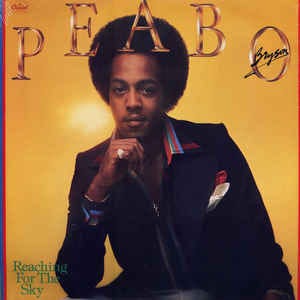
April 1978: With “Reaching For The Sky” as his newest album on Capitol, it’s obvious that Mr. Peabo Bryson has lofty ideas! Fortunately, everyone seems certain that he’s going to make it to the top, as David Nathan reports…
One of the most impressive chart entries thus far this year comes from a young man who has managed to build up a healthy following and a strong reputation in a relatively short period of time.
The gentleman with the distinctive name — there can’t be too many Peabos running around! — has a particular potent and distinctive vocal style and it comes as no surprise that as soon as Mr. Bryson’s contract with Bang Records (for whom he’d recorded one album which gave birth to three R&B-charted singles) was up, the astute Mr. Larkin Arnold, vice-president at Capitol Records, picked up the phone and tracked him down and before long, had Mr. Bryson in the studio recording his Capitol debut, “Reaching For The Sky” which has done very well for the gentleman.
But, since Peabo is probably a new name to many readers, let’s start at the beginning.
“I’m originally from Greenville, South Carolina,” the cheery Mr. Bryson reports from Atlanta, Georgia which is now his home town. “And, as far back as I can remember, I’ve always been into music.
“It’s all I ever wanted to really deal with and of course, like everyone else, I had to make that decision — I guess when I was around 14 — as to what I was going to get into, career-wise. Well, I’d thought about being a doctor or something like that, but I really felt that music was my thing.”
Peabo recalls that his mother was somewhat concerned about that “because she figured I’d turn into a drug addict or something like that!” but, fortunately for all concerned, Peabo convinced all and sundry that music was truly his forte.
“Whilst I was in high school, I started singing — I was with a local group called Al Freeman and The Upsetters — and believe me, we were terrible! Yes, you could say we upset a whole lot of people — we were that bad!”
Having made the decision to make music his career, Mr. Bryson hooked up with a fellow townsman, non other than Mr. Moses Dillard, who staunch r&b fans will remember for his classic “My Elusive Dreams”, recorded with brother Joshua for Bell Records around 1966.
“I joined Moses just after he’d had the hit with that record and initially, I started out just singing, although I progressed into percussion, guitar and much later, playing piano — that was basically when I started getting into songwriting.”
Peabo actually joined Moses’ outfit — known as the Tex-Town Display — around 1968 and stayed with them until the end of 1973, beginning of 1974.
He recalls: “We really did pretty well, with gigs in the Caribbean, we went to Vietnam, played at the Felt Forum in New York. In fact, all in all, we didn’t do at all badly and there were several points at which Moses seemed like he was really going to break through in a high way.”
In fact, the unit had one record out on Curtom Records in 1970 “which did nothing at all!” and around 1972-73, Moses met up with the principals at Bang Records in Atlanta — Ilene Berns (widow of producer the late Bert Berns) and Eddie Briscoe.
“At the time, Moses was really trying to get the company interested in three projects — himself, the featured girl with the band, Martha Starr, and the band itself, which included me. The result was that I got the opportunity to do a couple of things in the studio, though really you could say I was auditioning more than anything else and it was non-original, contemporary material anyway.”
After Bang had released a record on Moses and Martha and nothing too much happened, the company showed some interest in Mr. Bryson.
“Initially, my loyalty was with the whole unit and Moses because I just felt that there was safety in numbers and if you really don’t know the business, you can really make a lot of mistakes. I needed the protection of being part of a unit until I felt really secure about everything.”
With the failure of the Moses & Martha record, Peabo felt that the company was “really using a ‘divide and conquer’ strategy” and encouraged by the company, he worked on some songs with musicians from the Tex-Town Display.
“The first couple of things we cut no one was really satisfied with and then a friend of mine, Jesse Boyce, gave me some material, Jesse wrote “Firefly” which appeared on the Temps’ album, “A Song For You” and the material he gave me was fine but again, nothing happened with it.”
In fact, it turned out that Peabo’s very first record release on Bang was on a song “which I really didn’t like! It was a dinky kinda thing given to me by a real Nashville cowboy, with boots and all! It was called “Disco Queen” and it went at about 90 m.p.h.! To be truthful, I was ashamed of it even though it did fairly well regionally for me.”
That was in 1974 and Peabo’s next venture brought him into contact with Michael Zager (of Love Child’s Orchestra and Cissy Houston fame) who was producing Street Corner Symphony at the time for Bang Records.
“It was really like a kind of family situation with the label and one day, we were all just jamming around — me, Michael and Paul Davis and some musicians and the result was “Do It With Feeling” which came out on Bang under the name “Michael Zager and the Moon Band”. You can hear me doing some scatting on the record,” Peabo notes.
By this time, the gentleman had begun working on his first album project and he was steadily getting material ready for the event.
“We all felt that Gamble & Huff might be the right producers for the album but, to be honest, they weren’t able to assist and in a very polite way, they turned down the project. So I just decided to do it myself and Bang just freaked out! I figured I couldn’t wait for Gamble & Huff because it was just time for me to get working on the album and at the same time, I was pumping myself up because I really didn’t know for sure that I could do it all myself— you know, produce and all!”
The company made one more attempt to get outside help by approaching Quincy Jones but at the time, he was recovering from his brain operation of a few years back. “Ilene Burns suggested we go down to Muscle Schoals just to see what we could come up with and in fact, I finished a couple of things down there.
“We did a few things in Atlanta and I even went out to Los Angeles and worked on some things with Gene Page. I guess the whole project took around six to eight months with all the travelling around trying to get it finished and it was finally ready around the end of 1976.”
Peabo’s initial album, released in the beginning of 1977, yielded three high r&b records in “Underground Music”, “Another Day” and “I Can Make It Better” and he says that “I felt very good about the album but, of course, I see now that there are quite a few things I could have done differently.”
Considering that he wrote all the material (co-writing one song with Paul Davis) as well as producing the album, Peabo had every reason to feel proud, noting “that I got the confidence and learned a lot from just doing it. We played it to Gamble & Huff afterwards and although it wasn’t up to the standards by which they work — they really got it down to a science — they were impressed.”
Although the album didn’t make Peabo a millionaire and he wasn’t able to get the kind of tour support needed to promote and expose it, it did get sufficient exposure so that when it was time for Peabo to leave Bang, Capitol Records had already approached him with an offer.
“At the time, I was lacking in management and that didn’t help. When the time came, I felt that I was being stifled at Bang and I’d really gone into the shadows of a big act — Brick. But the one real good thing that the company did for me was turn me on to David Franklin, who handles the affairs of people like Richard Pryor, Roberta Flack, Brick and Donny Hathaway.”
When Larkin Arnold [of Capitol Records] called Peabo (”He actually called down to the Bang offices!”), Mr. Bryson had actually decided to see if he could work things out and stay with Bang “but we just couldn’t seem to get it together — there were personality problems and so on” and upon the advice of Mr. Franklin, Peabo found himself with a recording contract with Capitol.
“It was mutually agreed that Richard Evans should work with me on the first album,” Peabo states, “and I had been familiar with his work for the things he did with people like Natalie Cole, for whom he did quite a few arrangements on the first couple of Capitol albums.”
The result was “Reaching For The Sky”, which Peabo recorded in Chicago and he feels that “I got more of personal touch, there was more feeling put into the whole thing by the people there. Everyone — Paul Serrano (who owns P.S. Studios, where the album was cut), Richard, the musicians — seemed to be really involved. I’m pleased with the album but I feel like the next one will be even better.
“You know, sometimes you can just lose certain things in the transition from the rough idea on a song to its completion and that’s something that I’m going to be particularly aware of the next time we record.”
Already, Peabo’s second album is in the planning stages “although we haven’t actually finalized who will produce it — we have one or two people in mind” and he’s making plans to go out on the road “possibly with a Heatwave/Maze package.
“I’ll be carrying nine musicians and some of them will probably double doing the background vocals. I’m really looking forward to it because it’s going to be my first real national tour.”
At this point in time, Peabo says he feels “very happy about everything. I don’t feel that I’m really in competition with anyone but myself because I want my music to be distinctive to the point where people consider it the best around!
“I really dig the appreciation that I’ve been getting from my music and I feel that I have been Heaven blessed with the chance to express my feelings and thoughts to people through music. You know, I’m really not into material things per se and I’m concerned about my music from an artistic point of view.
“More than anything, I want my music to reflect reality, the truth, not sugar and spice.”
Peabo hopes to be in a position at some point in his career where he can produce other acts and “maybe do a soundtrack for a movie, even put my mug in there too!”
His debut album on Capitol may well have a prophetic title in “Reaching For The Sky” and no doubt, Mr. Bryson is well on the way to achieving such lofty heights.
There seems little doubt that whatever he turns his hand to (be it soundtracks, outside productions or just his own albums), Mr. Bryson is going to be eminently successful and we strongly recommend that you keep a careful eye out for this amiable young man.
© 1978, 2026, David Nathan, All Rights Reserved
While my first conversation with Peabo was on the phone, my second interview with him took place in person in Atlanta on my first visit to the city. At his high-rise apartment on fashionable Peachtree Street, he was enjoying the success he had achieved over the months since we first spoke and open to sharing on a more personal level how he was finding life in the spotlight…
Read on…
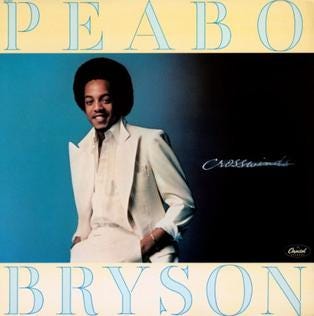
January 1979: With his debut album for Capitol, already certified as gold, Mr. Peabo Bryson is truly “reaching for the sky”. His newest album, “Crosswinds” looks set to emulate its predecessor’s success. Peabo expressed some of his feelings about it amongst other things in a recent interview with David Nathan…
“I’ve learned a great deal about this business and I’m still learning. Sure, I had to take the knocks and experience can sometimes be a terrible and hard way to learn but it’s what’s necessary to make you aware of what’s going on in the industry.”
So speaks Mr. Peabo Bryson, a young gentleman whose career is definitely on the ascent, if the reaction to his first Capitol album is anything to go by.
“The company really thought the album, “Reaching For The Sky” had peaked but after I went out there with my show, it started to pick up again. You see, we went out live to kill! We wanted to get to the audiences. But, no, I didn’t quite think it would do as well as it did. I just knew I had done my part to make it happen to the best of my ability and after that, it was out of my hands.
“Naturally, I was ecstatic when it did hit gold and I had already perceived from the people’s reactions to us on stage that something big was about to happen! My attitude to the album, I guess, had a lot to do with it: I never listened to it after we finished it.
“I’m not one of those people who relish and roll around in their own glory. That possibly made me a little sceptical that the album would take off like it did but I’m more than thankful that it did.”
Those who may not be too familiar with Peabo’s background should know that he’s originally from Greenville, South Carolina. He was always around and into music during his high school and around 1968, teamed up with Moses Dillard and The Tex-Town Display. He stayed with the outfit until around 1973 and during that time, met Eddie Briscoe from Bang Records, a gentleman Peabo credits with having really been an instrumental force in his career.
“Eddie showed me that I could write, that I could do a lot of things myself. And that’s basically been the key to my development. I’ve believed in my own ability and I’ve managed not to compromise creatively.”
Peabo recalls that, once he realised that he wanted to strike out on his own, he continuously “bugged at the folks at Bang to let me record an album. It was a heavy investment for anyone to make but I guess I just stayed on their case sufficiently!”
The result was Peabo’s debut album on Bang which he still maintains “contains the best songs I’ve written to date. I believe there are five exceptional songs on that album including “I Can Make It Better” which is a song which we performed on the road.
“In fact, I guess Capitol must feel pretty strongly about the album too since they recently purchased it from Bang. I guess they will re-release it at some point in the future and sure, whenever they do, I’ll re-introduce some of those songs into my stage act.”
After the period with Bang, which helped to at least introduce Peabo’s name to record buyers in some areas of the States, he was contacted by Larkin Arnold, then at Capitol Records who spotted in him a tremendous creative ability and signed him shortly thereafter.
The success of his debut album has naturally led to immediate reaction on the newest set, “Crosswinds”. Peabo comments on the set: “I think it’s just in my nature to go against the grain, accept the challenges that come along. There are still people who aren’t really aware of what I can do so I’m constantly showing people that given the freedom I can come through with what they want, without compromising myself creatively.
“Having the first album on Capitol turn gold certainly added some pressure but I intended that this album showed more dimensions to me and I think it’s done that. I think it’s truly positive, it reflects more and more about me, what I’m about.
“Take songs like “Point Of View” and “She’s A Woman”, they’re kinda different from what people may expect from me. But so far, the reaction from everyone seems to be positive. I’ve had some folks say they like six songs but not two — but believe me, I don’t feel bad about that! Most folks only like one or two cuts on an album these days!”
On this album, Peabo worked with veteran producer/arranger Johnny Pate. “I needed Johnny’s input as a sounding board, I needed his objective viewpoint and his experience — and he’s a beautiful person so working with him was just fine. He was helpful all the way down the line although to begin with, he just couldn’t understand me!
“I mean, what happened was that I’d play something on the piano just to give the musicians a guide on a particular part but I wouldn’t sing anything — and Johnny’s used to hearing someone sing whatever they want as well. But he was great — he helped with working on some intros and endings for some of the songs and he’s like me, he likes to break the rules! For instance, for the first time, we used all the guys from my band in the studio and we even had a couple of people doing background who’d never done that before!”
Peabo may ‘break rules’ but there’s no doubt that the end result hardly gives any clue to that — the album is currently zooming up all the charts and seems to have received almost immediate response from everyone.
“I think what’s really important about this album is that I’m developing. I’m constantly learning, each new album seems to reflect more and more for me. Gradually, I’m discovering my own personal formula as a producer so that I’ll be able to work with other acts at some point in time, when we can actually find the time to do that!”
Anyone who listens to Peabo’s music can hardly fail to see that love and its many ups and downs is a constant theme.
“Well, there are several things to say about that. Firstly, I’m concerned with pleasing people and giving them something they can and will relate to. In my writing and when I record, I’m aware that I have to aim and direct myself towards public acceptance to an extent so I do that with music that they will dig — because I zero in on the things that people are digging in the marketplace — whilst at the same time making it music that I also dig myself.
“I’m fortunate in that people accept me doing ballads and they want to hear something about things that you’ve been through as the artist because it somehow seems to cushion a lot of things for people to know that they’re not the only ones having to deal with a particular situation, for instance…”
“I’m not afraid of being vulnerable. There’s nothing wrong with admitting that you’ve loved and lost, that you’ve been hurt, felt pain. The most important thing is that you survive and that’s something to be proud of. You’ll find my songs deal with all aspects of those situations: the good, the bad and the ugly.”
“In my songs, I can be the victim or the victimiser, I can go through times when I feel good about an emotional experience or situation and then I can feel bad. You see, I’m basically a reflective person and I try to keep myself open to life. I can only write about truth and reality, what I’ve seen, what I’ve experienced and I don’t think there’s anything wrong with that kind of vulnerability because people like to deal with what’s real and they can usually sense when your songs reflect a genuine feeling you’ve had or experienced.”
When Mr. Bryson reflects on his career in general and its present upward movement, he has this to say: “I always acknowledge the presence of God in everything I do. After all, that is the source for all the creativity. And He is the only power greater than anything, so I don’t look at other people in awe, I realise that I can do all the things that the Creator has given me the ability to do.
“The way I look on that whole being in the number one spot thing is simple: you can only ever be there for a quick minute — there’s always going to be somebody else coming along. So you keep your feet on the ground, don’t get overawed by your acceptance and most of all, you continue to learn about humility. In fact, that’s something that should increase with any success: your ability to be humble and realise that there is a source you must acknowledge for whatever happens.”
Peabo notes: “For me, being an artist is not a personal quest. It’s not about the material things — I would never have traded places with Howard Hughes! Sure, you want some things for your family and you do a few things for yourself but to me, it’s about remaining the same person, just growing and learning.”
There is no doubt that Mr. Bryson is truly headed for the top. What makes it so refreshing and rewarding is to see success coming to a young man whose obvious motivation is sincere and genuine, whose love of life is paramount and whose talents match his positive goals and attitudes.
With his head and heart in the right place, Peabo Bryson can hardly fail to captivate people everywhere with his music.
© 1979, 2026, David Nathan, All Rights Reserved
Look out for my Substack podcast post in which I’ll reflect on my memories of Peabo and his music..
I will remember him always for his excellent duet with Roberta Flack. "Tonight, I Celebrate My Love.."